Transforming Healthcare Connectivity with TP-Link
As healthcare continues to undergo rapid digital transformation, the importance of reliable, secure and high-performance connectivity cannot be overstated. Hospitals, GP surgeries, private clinics and care homes are increasingly dependent on digital systems to deliver efficient, high quality patient care. From electronic health records and diagnostic imaging to telemedicine and IoT enabled medical devices, today’s healthcare environments demand networks that are always on, always secure and built to perform.
At Purdicom, in partnership with TP-Link, we help healthcare organisations build networks ready for these demands. By combining practical expertise with advanced technology, we help build infrastructures that keep operations running smoothly and support better patient outcomes.
The Growing Demands on Healthcare Networks
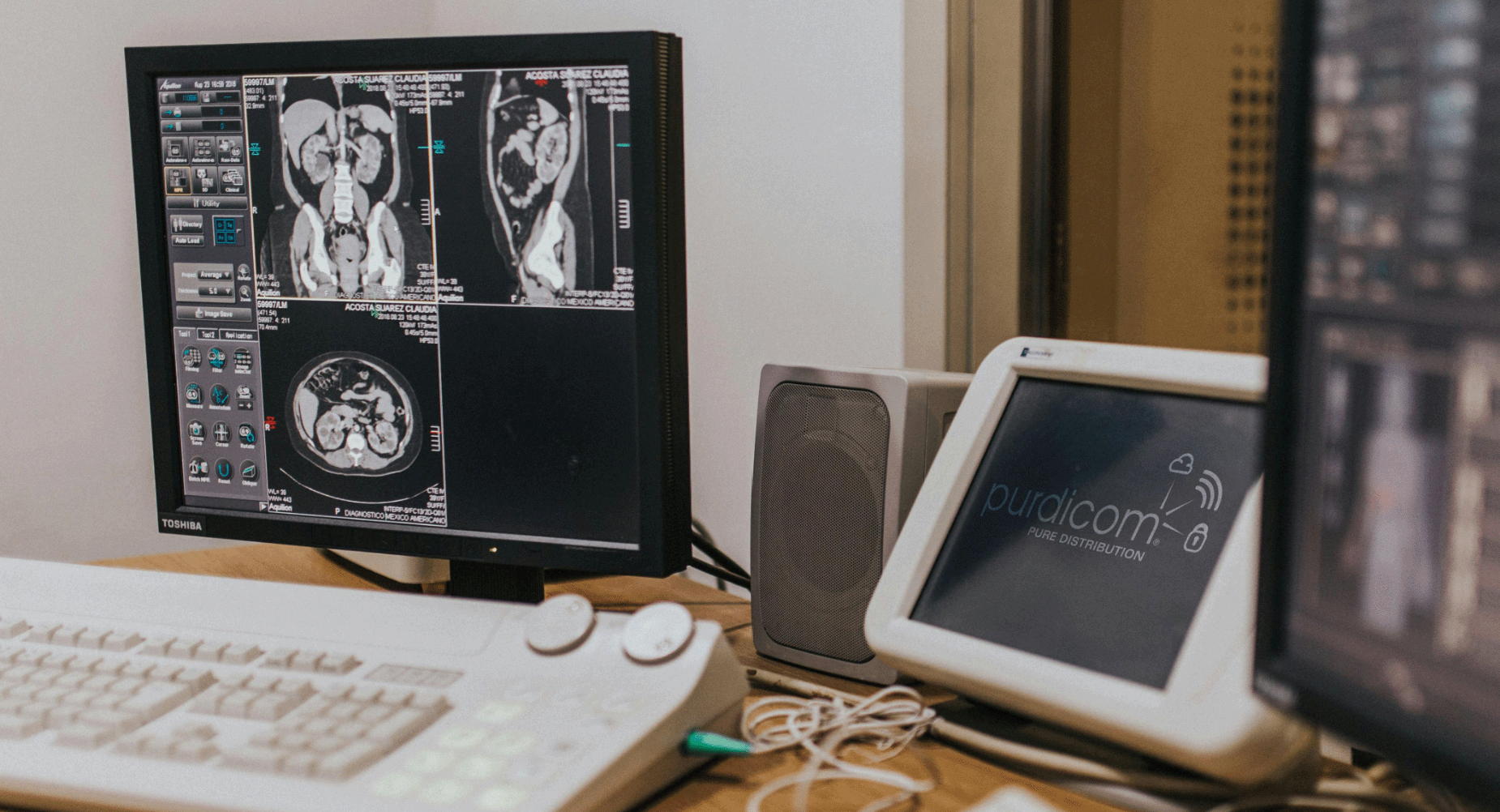
Healthcare environments present a unique and often complex set of networking challenges. Unlike traditional office settings, networks in healthcare must support a diverse mix of devices and applications, many of which are mission critical.
One of the most significant challenges is device density. Healthcare facilities often operate hundreds or even thousands of connected devices simultaneously. These range from clinician workstations and mobile devices to patient monitoring systems, imaging equipment and guest access networks for patients and visitors. Each device places pressure on the network, making performance, capacity, and intelligent traffic management essential.
Security is another critical concern. Healthcare organisations handle highly sensitive patient data and must adhere to strict regulatory requirements around data protection and privacy. Networks must be designed with robust security frameworks, including segmentation, authentication protocols and controlled access to ensure that data is protected at every level without restricting usability.
Reliability is equally vital. In healthcare, downtime is not simply an inconvenience, it can directly impact patient care and clinical decision making. Networks must deliver continuous availability, with resilience built in to minimise disruption and ensure rapid recovery should issues arise.
In addition, the increasing reliance on cloud based platforms and telehealth services has further elevated the importance of connectivity. Clinicians and patients alike depend on stable, high speed networks to communicate effectively, whether consultations take place on-site or remotely. As healthcare delivery models continue to evolve, network infrastructure must be able to support these changes without compromise.
Supporting Modern Healthcare Environments
TP-Link addresses these challenges through a comprehensive portfolio of business networking solutions, including its Omada Software Defined Networking (SDN) platform. Designed with scalability, simplicity and performance in mind, Omada enables healthcare organisations to deploy and manage enterprise grade networks efficiently.
Centralised cloud management is a key advantage. Through a single interface, IT teams can gain full visibility of their network, monitor performance in real time, configure devices and resolve issues remotely. This is particularly valuable for organisations operating across multiple locations, such as hospital groups or care providers managing several sites.
Scalability is another essential benefit. As healthcare organisations expand or adopt new technologies, their networks must evolve accordingly. Flexible infrastructure allows for the seamless addition of access points, switches and other components without unnecessary disruption or complexity.
Security is embedded throughout the network ecosystem. Features such as VLAN segmentation, secure guest access and advanced authentication protocols help safeguard sensitive data while ensuring that staff, patients and visitors can connect appropriately. This balance between accessibility and protection is critical in healthcare environments where both usability and compliance are essential.
Importantly, these solutions deliver enterprise-level capability without unnecessary complexity. This enables IT teams to focus on maintaining service quality and supporting clinical systems, rather than being burdened by overly complicated network management.
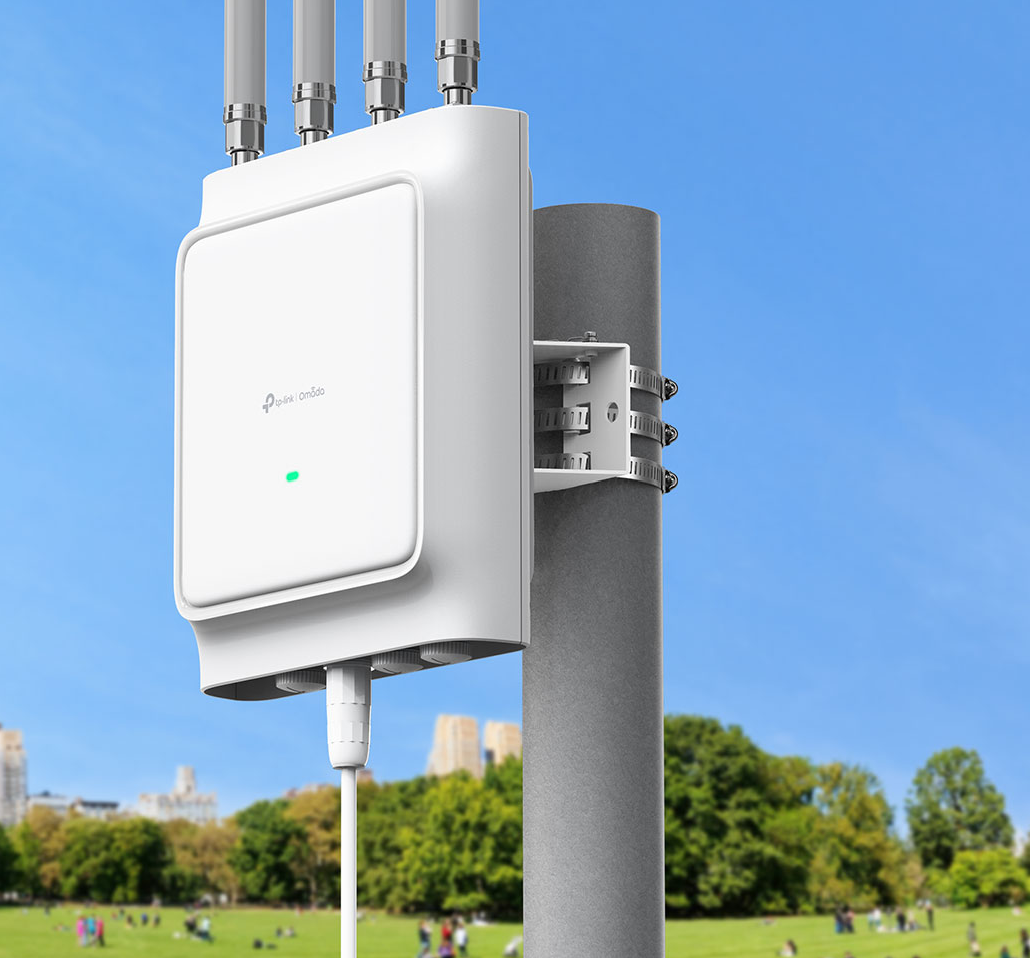
Product Spotlight: EAP668-Outdoor HD
Healthcare connectivity does not stop at the front door. Large hospital campuses, temporary treatment areas, and outdoor spaces such as waiting zones or ambulance bays all require reliable wireless coverage.
The TP-Link EAP668-Outdoor HD is designed to deliver high-density Wi-Fi in challenging outdoor environments. Built to withstand varying conditions while maintaining strong performance, it enables consistent connectivity across extended areas, ideal for hospital grounds and external care settings.
With Wi-Fi 6 capability, it supports a high number of concurrent users and devices without compromising performance. This ensures staff can access critical systems on mobile devices while maintaining reliable connectivity for temporary or overflow care environments.
Seamless integration with the Omada platform allows both indoor and outdoor networks to be managed through a single interface, simplifying deployment and ensuring consistent security policies across the entire site.
Product Spotlight: SG3218XP-M2
A reliable healthcare network is underpinned by a strong wired backbone. Switches play a fundamental role in ensuring data moves efficiently and securely between devices, servers, and applications.
The TP-Link SG3218XP-M2 provides the performance and flexibility required for modern healthcare environments. With multi-gigabit ports and Power over Ethernet (PoE+), it supports bandwidth intensive devices such as Wi-Fi access points, IP cameras and communication systems from a single platform.
This approach reduces the need for additional cabling and power sources, simplifying deployment in complex healthcare settings where efficiency and minimal disruption are critical.
Advanced Layer 2+ features, including VLANs and QoS, ensure critical applications are prioritised, so essential systems always get the bandwidth they need. Fully integrated with Omada SDN, the switch can be centrally managed alongside other network devices, providing complete visibility and control across the infrastructure.

Enabling Better Outcomes Through Better Connectivity
Reliable networking is no longer just an IT requirement; it is a fundamental component of modern healthcare delivery. The ability to access information quickly, communicate effectively and support digital services directly impacts both patient care and operational efficiency.
Improved connectivity enables faster access to patient records, supports collaboration between clinical teams and enhances the delivery of remote care services. It also provides the foundation for emerging technologies, including smart healthcare systems and data-driven decision making.
As the sector continues to evolve, having a network that is secure, scalable and resilient is essential. Healthcare organisations must be prepared not only for current demands but also for future innovation.
Through this partnership, Purdicom and TP-Link are committed to supporting healthcare providers in building networks that meet these challenges. By focusing on performance, security, and simplicity, we help create infrastructures that empower organisations to deliver better outcomes for patients and staff alike, while remaining ready for the future.