
Handling High-Demand Connectivity for Education

This final stretch of the school year is an important time for many of students in secondary school or higher education. That’s why RUCKUS Networks provides the high-level connectivity required to handle modern day demands.
With increasing amounts of information now being accessed online, many students will be using online resources, electronic devices and other network dependant tools to try and give themselves the best possible results in their exams. With many students attempting to do the same thing in a condensed space, the expectations are becoming more and more unprecedented.
We will look into how different areas of education benefit from RUCKUS to help students complete their revision as their exams and deadlines approach. It’s not just about how fast a connection can go when everything is running smoothly – it’s also about what happens when there are obstacles to overcome. How do the access points connect to the central command? Or what happens when thousands of devices are connected at the same time?
For IT teams based on campus or at the schools these students are based, it can be a very stressful period for them with tickets being raised constantly with varying issues. RUCKUS meanwhile is designed to deal with these high-density environments and uses Machine Learning to help support these IT teams to take the load off them.
Some of the activities students may choose to use the network for include:
- Streaming recorded lectures, watching tutorials
- Researching the internet for case studies and previously written literature
- Utilising any interactive platforms which contains valuable revision content
In cases of where students bring their own devices (BYOD) that would usually mean multiple devices per user: phone, laptop, smart watch etc. and on sites like campuses where there can be thousands of students, imagine at least two devices per person. It adds up, but it’s something RUCKUS is built to manage.
We’ll take a look now at how RUCKUS handles education for different levels:
- Secondary schools
- College campuses
- Universities
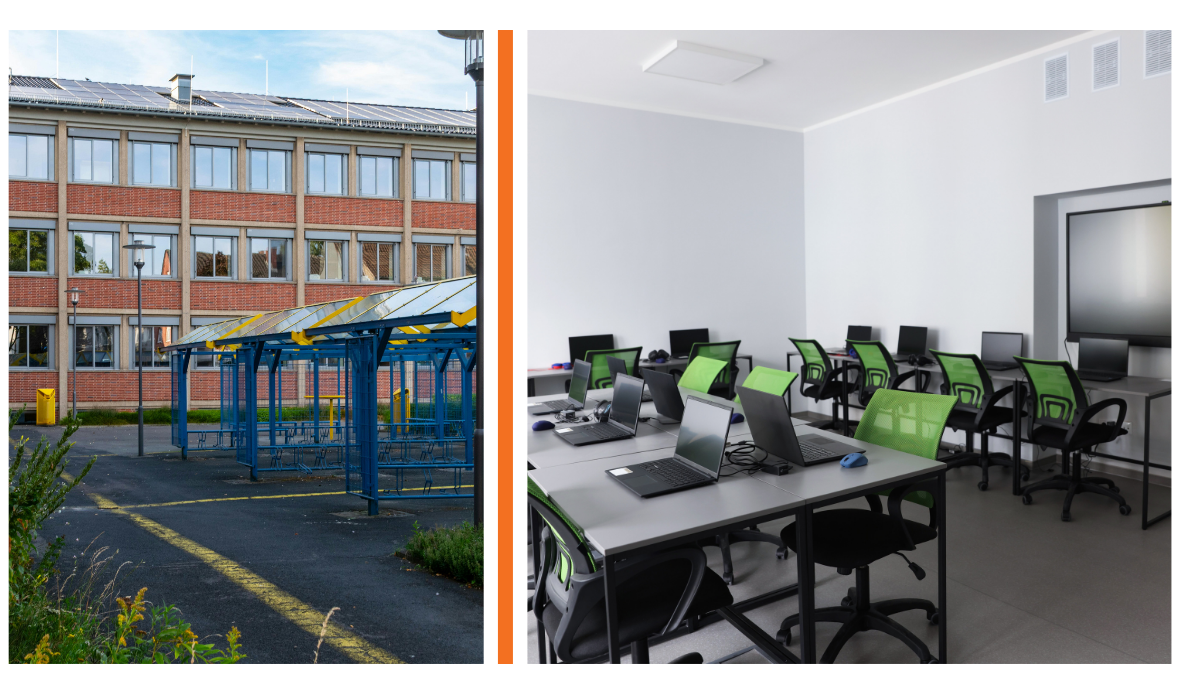
Secondary Schools
In secondary schools, learning is typically more structured, with teachers assigning past papers and other revision resources for independent study. However, during in-class study sessions where many students access these materials online at the same time, the network must be capable of handling high concurrent demand without performance issues.
RUCKUS has a large variety of products of which some can be found in schools:
– Access Points such as the R350 and R550
– Network Management: Unleashed and One
– Switches: ICX 8200
Access points, such as the entry-level R350 can be deployed as one per classroom and handles 30 – 40+ devices simultaneously, as they can be ceiling mounted, they are compact and discreet devices which blend in with the environment. For schools who want to upgrade their older Wi-Fi, they are best suited to the R350.
For higher-density environments such as IT suites or libraries, the R550 is better suited due to its ability to handle more intensive, simultaneous usage, including video streaming and collaborative applications.
School IT teams can benefit from Unleashed and RUCKUS One as they provide schools with simple low-maintenance network management. Unleashed is better for smaller schools with smaller IT teams who simply just want Wi-Fi connection. Without the added complexities of configurating standard network, Unleashed ensures controllers are built into the access points.
RUCKUS One is better for large scale schools where there is no individual centre point, R1 allows people to connect from anywhere whilst still be securely connected to the network. Using AI to assist with time consuming tasks, it frees up the time of smaller teams to focus on other priorities.
Schools using ICX switches, such as the 8200 series, are also well-equipped to handle peak revision periods. Their higher throughput and scalability ensure that increasing network demand remains within the capabilities of modern Wi-Fi standards, including Wi-Fi 6 and Wi-Fi 7.
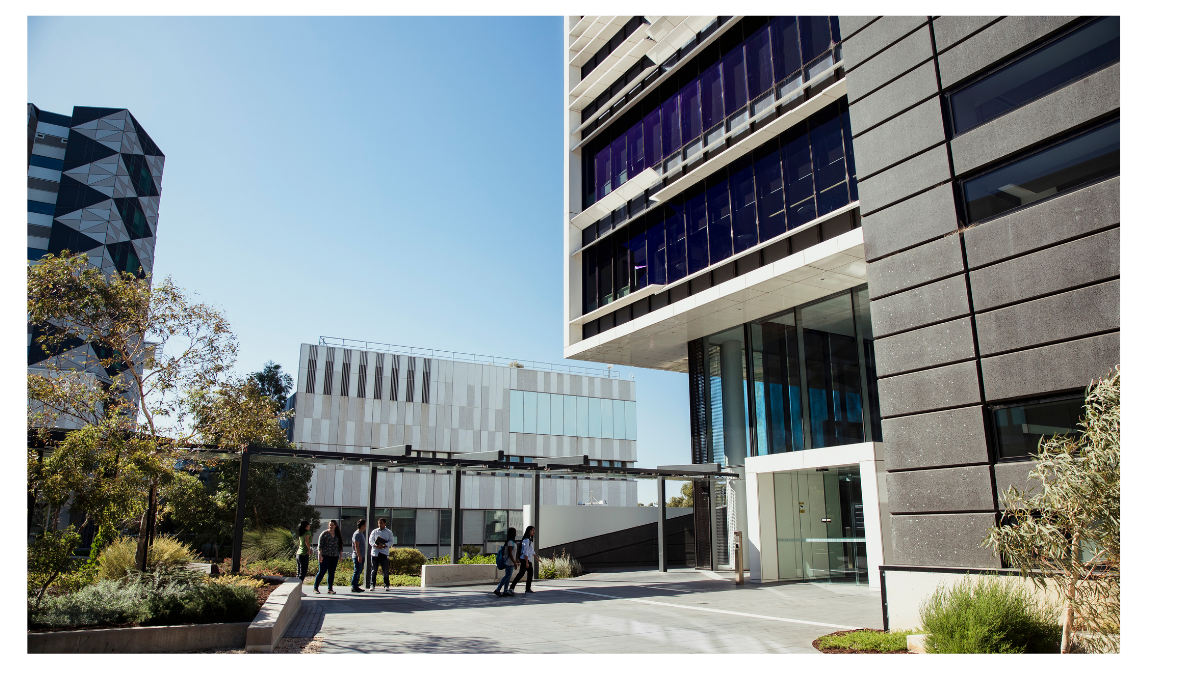
College Campuses
Campuses are not as easy to channel traffic due to the mixed users accessing the network. Shared campuses often support multiple cohorts at once: students, the teaching staff, administrators and guests. Now factor in revision periods when there will be more people on site to also use the facilities – it can get quite busy.
RUCKUS can enable prioritising for specific applications. For instance, as it’s a revision focused period, the network can prioritise revision and other platforms which will help students as they focus on exam preparation during a steep rise in network demands.
Students revising, staff working, and visitors accessing guest Wi‑Fi can all use the same system without affecting each other’s experience. This segmentation is so important during exam periods when staff also rely heavily on digital systems for marking and administration.
Platforms designed by RUCKUS such as SmartZone and R1 also allow IT teams to monitor trends and hotspots and off the back of that, can make adjustments in real-time to improve user experience. During this period of the year, day to day can vary significantly so being able to react swiftly is very useful.

Universities – 24/7 Demands
Unlike with the other two areas focused on, Universities work more on a 24/7 clock, meaning there is always someone online. During exam season, a single university can see tens of thousands of concurrent connections, especially in the halls of residence. RUCKUS is successfully able to handle this scale because, through intelligent traffic management and adaptive radio technologies it can maintain performance even at peak load.
At University, many of resources are either online lectures, virtual labs or online chat rooms between students and lecturers. RUCKUS is capable of handling this mix of high-throughput and low latency traffic to prevent some students from experiencing poor quality video streaming or unstable collaboration sessions. In this environment, there is always someone connected, down time is a non-negotiable. RUCKUS’ self-optimising and self-healing features allow networks to adapt automatically to interference or hardware issues, reducing downtime when the pressure is at its highest.
Conclusion
If there was any doubt if RUCKUS would be able to handle high-density environments? The compelling answer is yes. Whether it’s the access points, with the different variants. Or it’s the switches – Wi-Fi performance depends on the wired network underneath. Or even the network management tools such as Unleashed or R1, all of these are designed for situations where demand is concentrated, unpredictable and sustained. It’s never been about just coping for RUCKUS, it was built for this.
If you would like to discuss your current network set up, get in touch with us sales@purdi.com or give us a call 01488 647 647.